altar CARDS
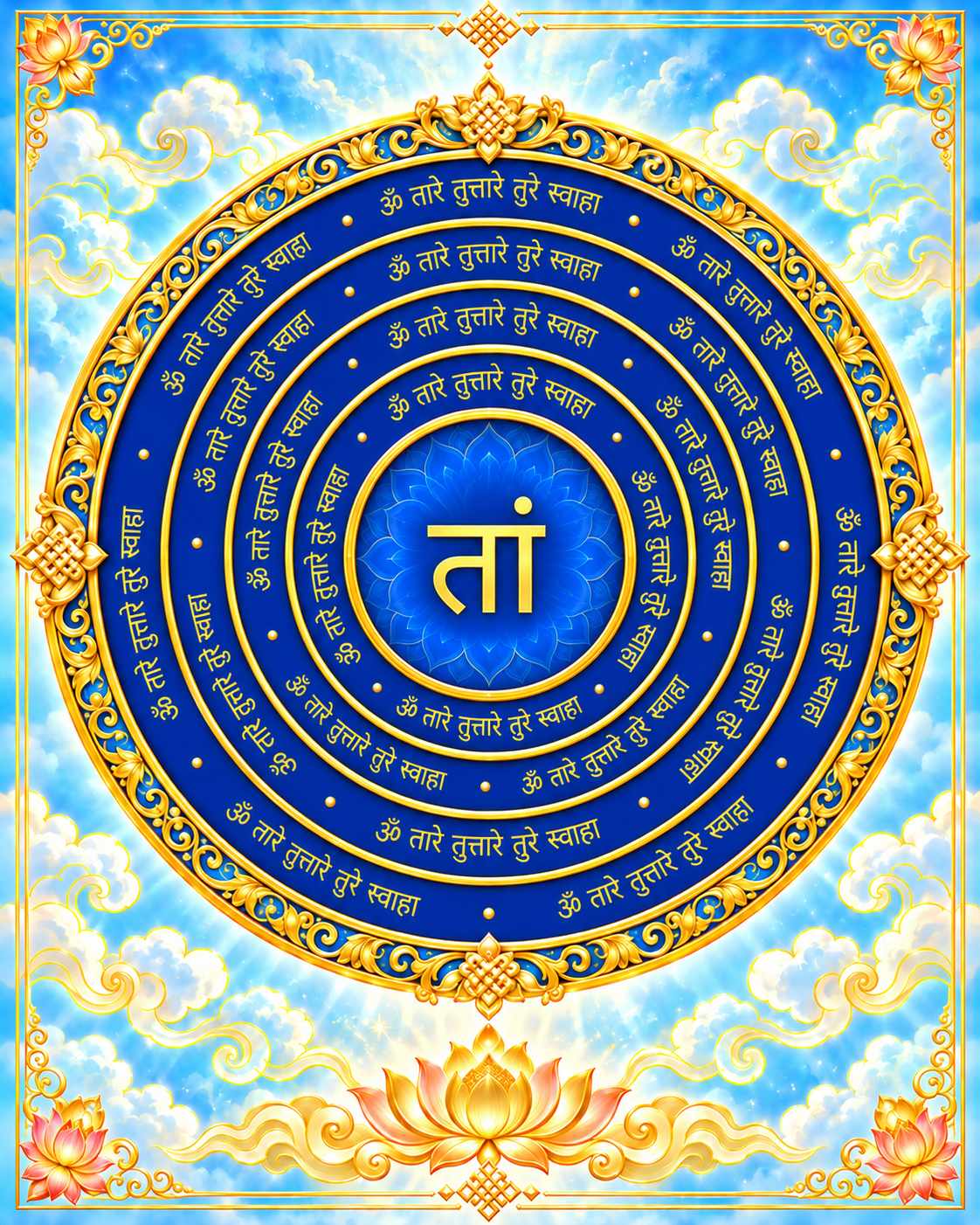
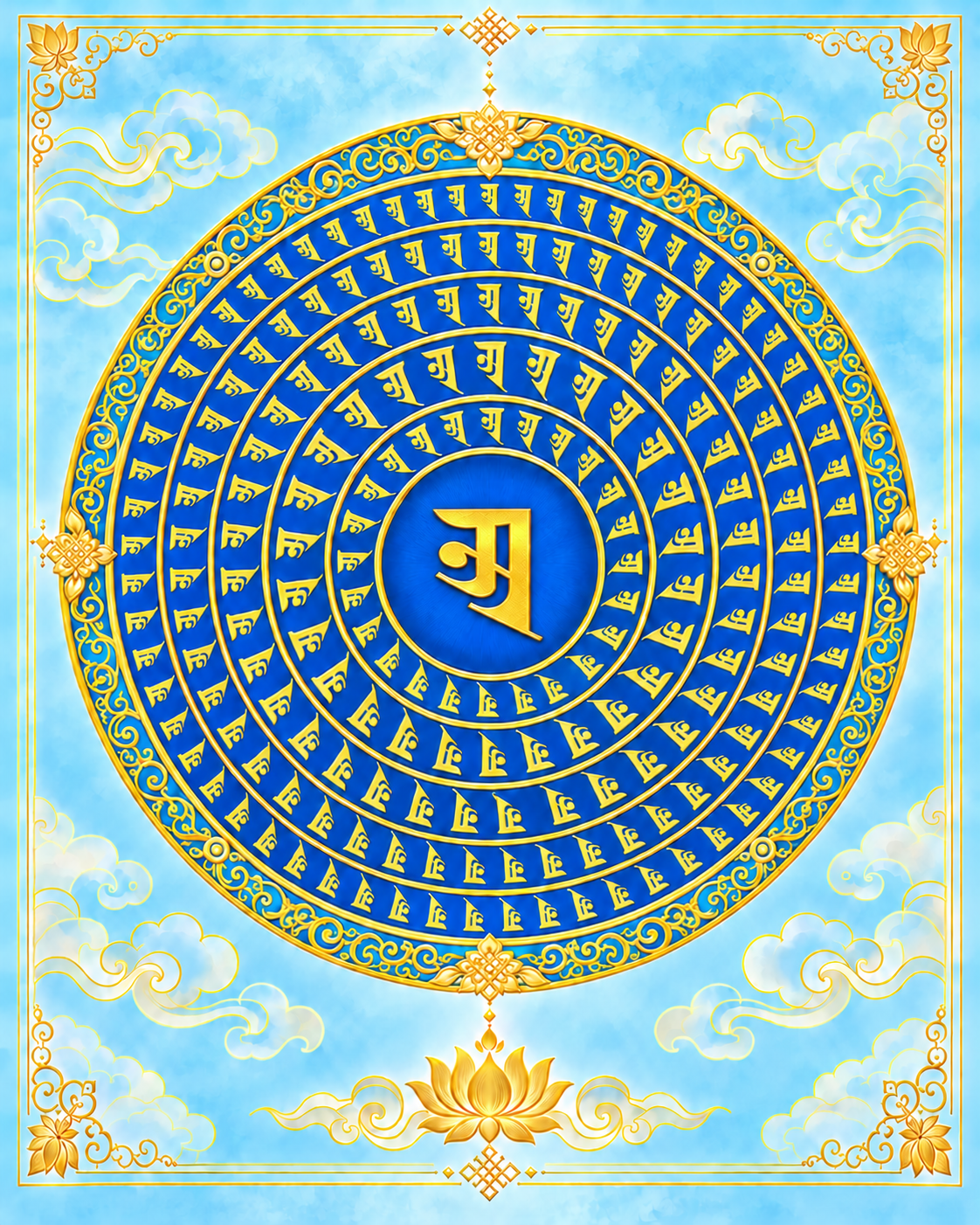
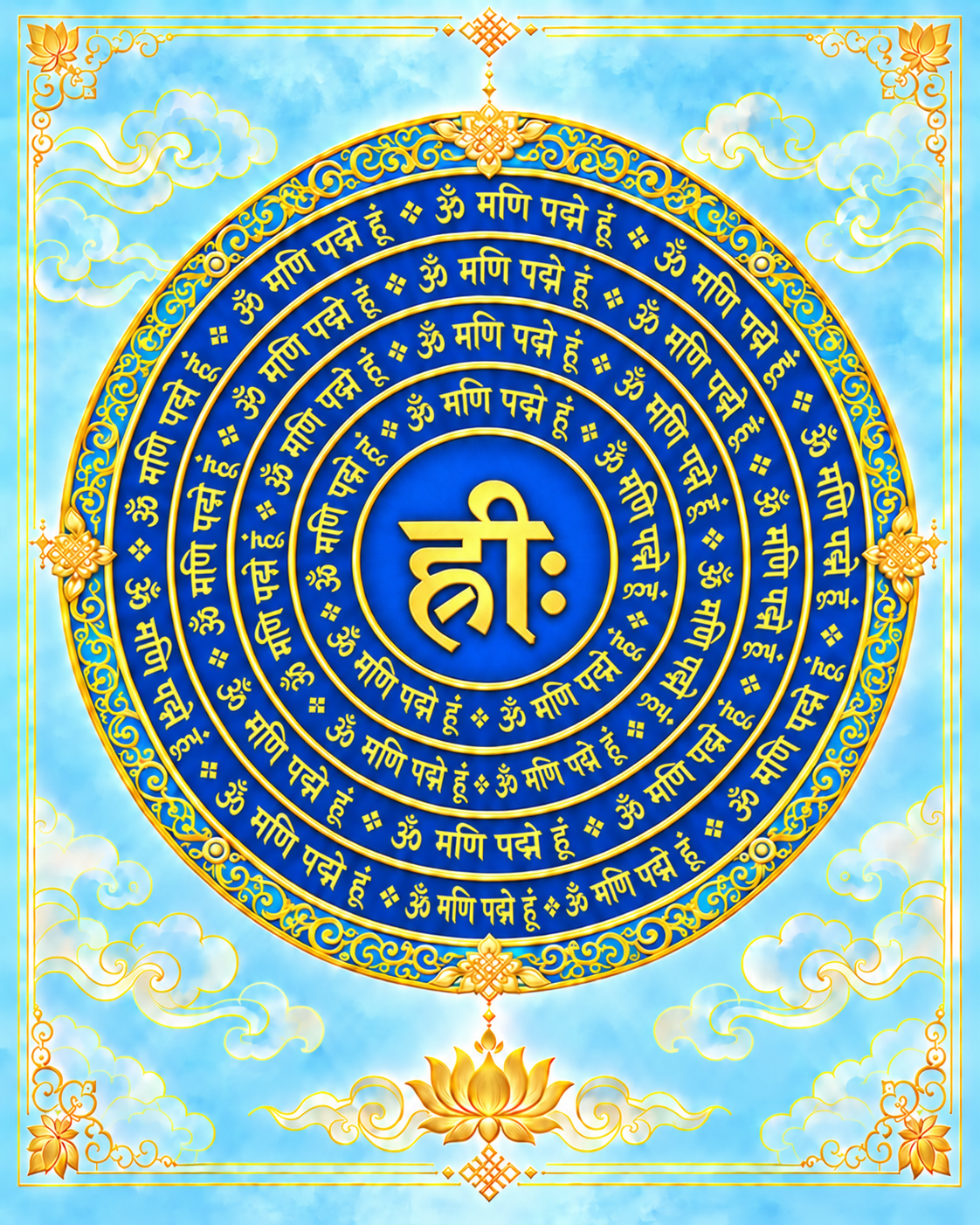
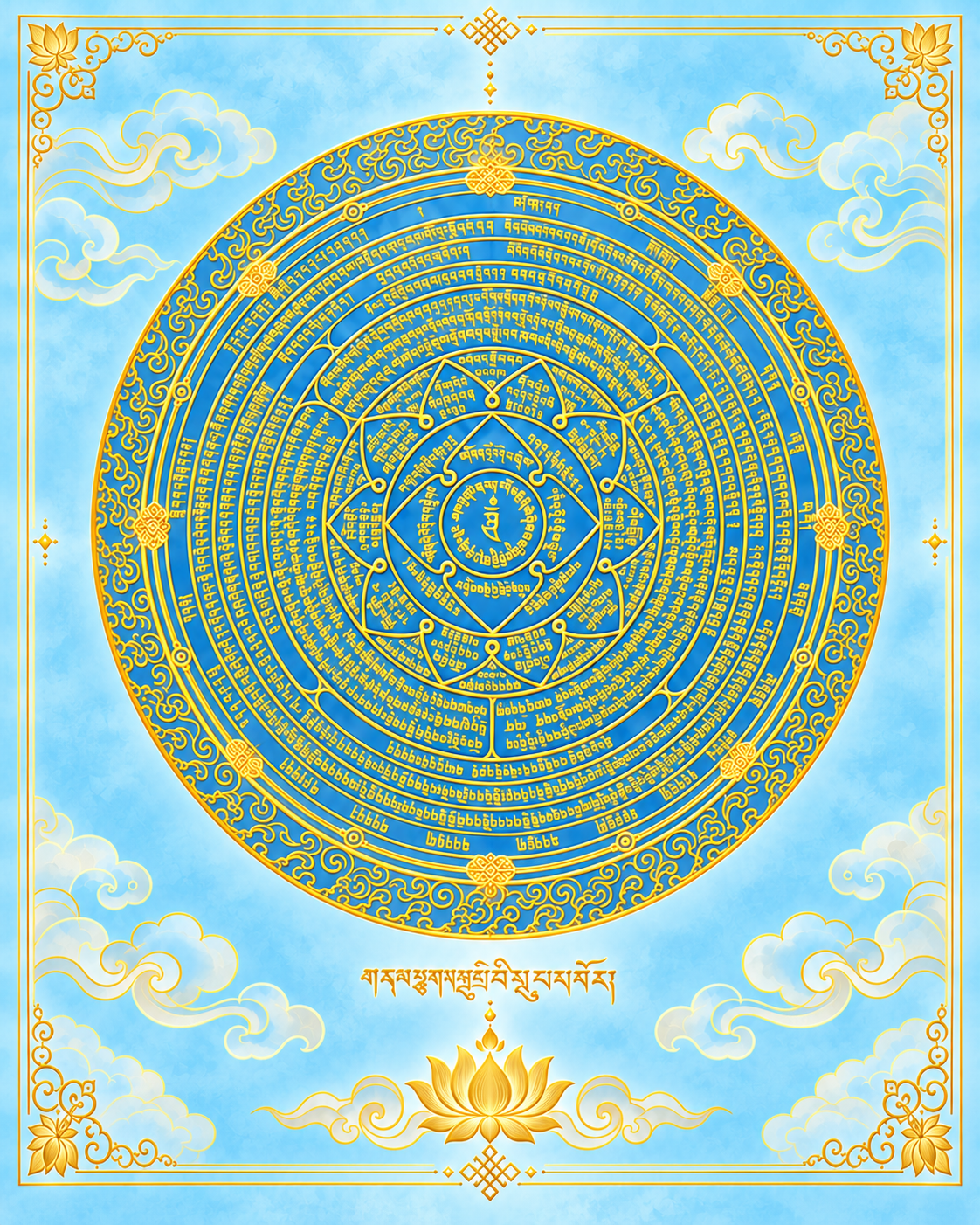
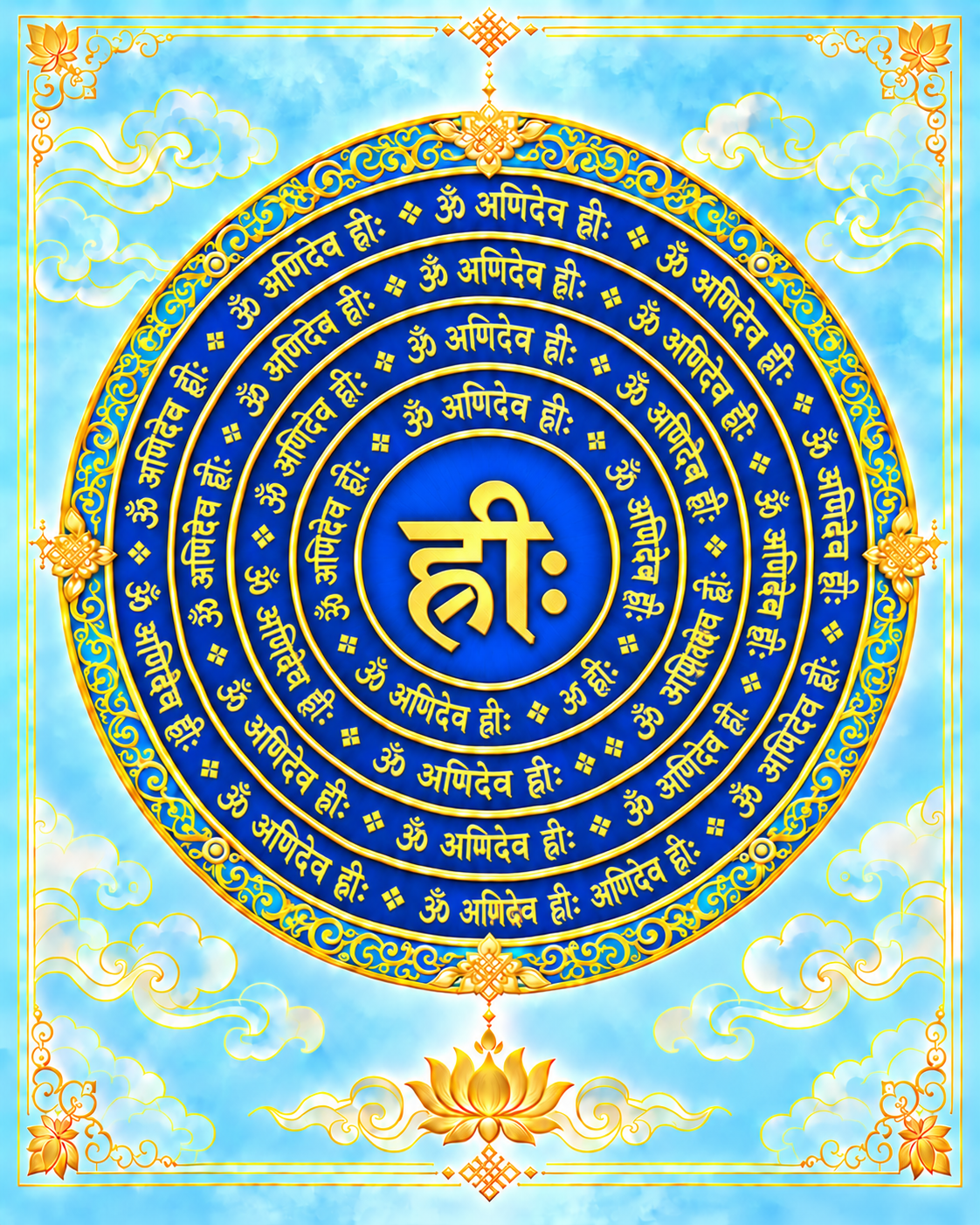
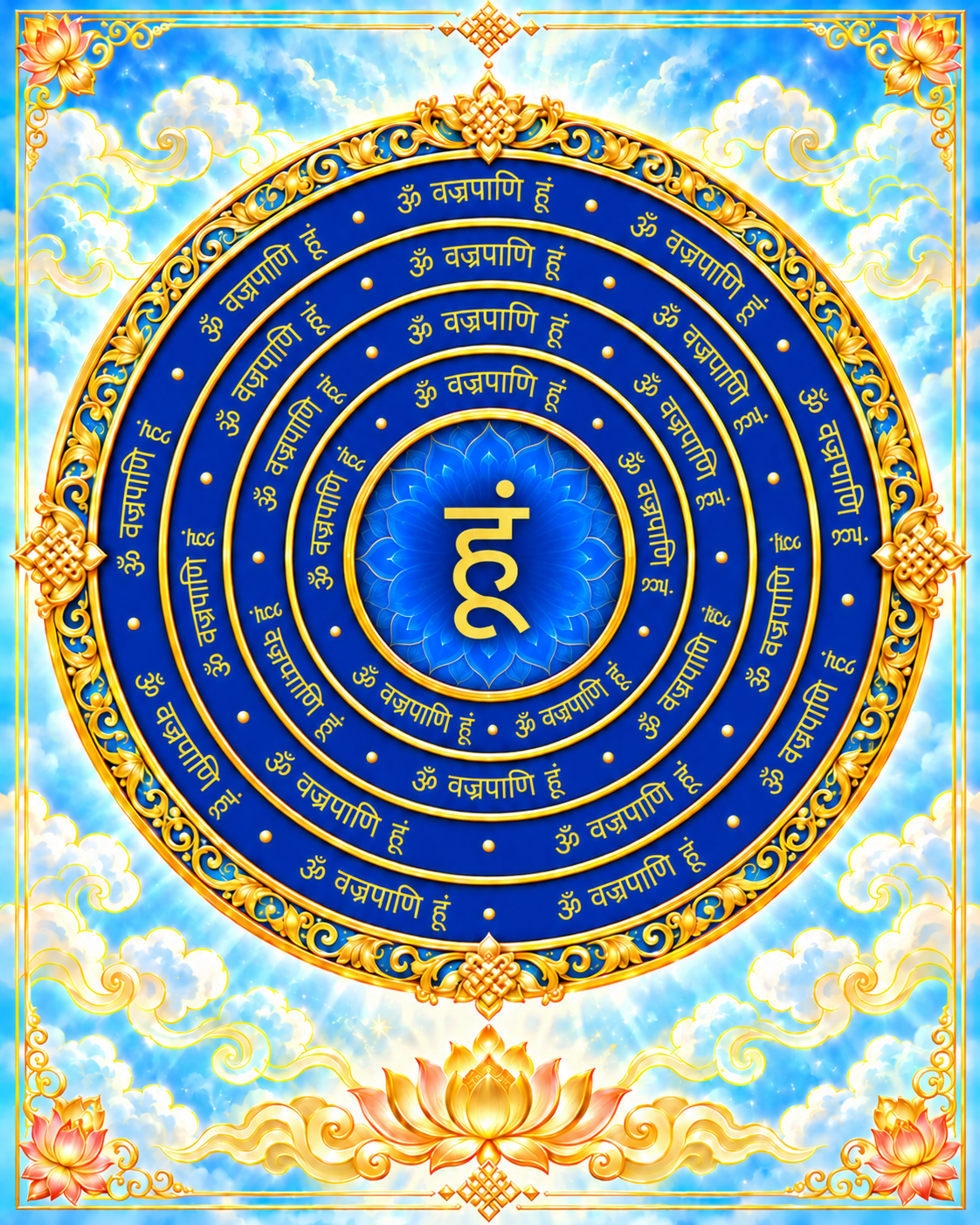
These amulet cards (or Dharani wheels) are generated with the calligraphy of senior Buddhist nuns and were consecrated by them according to tradition. They were consecrated a second time by Rigdzin Jamyang Tenphel and Lama Pema Düddul. The amulet cards are A5 card (148 × 210 mm) with rich gold on pale blue and feature wheels of Sanskrit or Tibetan seed syllables and mantra. You can place these on your own altar or give them to others, especially when they are facing challenges. The amulets are for healing and long life (Ushnishivijaya/Namgyal), for protection (Arya Tara, Vajrapani, and Avalokiteshvara), for the dead and dying (Amitabha), and swift realisation (AH/Samantabhadra amulet). We are offering the amulet cards at a little over cost of production and postage within Australia. Any income above cost will go towards our Awareness Hermitage project.
Dharani wheel amulets are among the oldest and most widespread forms of protective objects in Buddhism, especially in the Mahayana and Vajrayana traditions of Tibet, China, Mongolia, Korea, and Japan. A dharani is a sacred incantation, usually longer than a mantra, believed to hold the essence of a Buddha's teaching or the power of an enlightened being. In these amulets, the syllables of one or more dharanis are written or printed in concentric circles or spirals around a central image, often a deity, a seed syllable, or a lotus. The circular arrangement is itself significant: it echoes the mandala, the cosmic diagram of an enlightened realm, and the Dharma wheel, the symbol of the Buddha's teaching set in motion. Some of the earliest surviving examples of printing in the world are Tang dynasty sheets of the Mahapratisara ("Great Amulet") dharani, found folded in armbands or placed in tombs, showing how old and how valued this practice is.
Dharani wheels have long been placed on altars as well as worn, or placed with the deceased for burial. When placed on an altar they serve as both a protective presence for the home or temple and a focus for devotion. Placed on an altar, the wheel becomes a small mandala at the heart of the household's spiritual life, sitting alongside statues, offerings, and scriptures as one of the supports for the Buddha's body, speech, and mind. Because it carries the Buddha's words, it is generally understood as a representation of enlightened speech. The traditional purpose of an amulet on an altar is to protect and bless the space and everyone in it. Where a worn amulet guards an individual, an altar amulet is believed to radiate its influence across the whole home, shielding it from illness, misfortune, harmful spirits, and obstacles, and to bring peace and harmony to the household. Specific wheels were prepared for particular needs, such as protecting a family through a difficult astrological year, supporting the health of an elderly or sick relative, or guarding a newly built house. Making offerings before the wheel of water bowls, incense, flowers, or light is seen as a way of honoring the enlightened beings it represents and renewing its blessing.
Displaying the wheel openly connects it to the Tibetan idea of thongdrol, or "liberation through seeing." This teaching holds that certain sacred images, mandalas, and mantra wheels are so charged with enlightened power that merely looking at them plants a seed of awakening in the mind, dissolves negative karma, and helps the viewer toward a good rebirth and eventual liberation. The term is most famously associated with the enormous thangkas unveiled at monastery festivals, but the same principle applies to many smaller sacred objects, and some dharani wheels are described as liberating through seeing, hearing, or touching. On an altar, this means the wheel benefits not only those who practice before it but also guests, children, and even animals whose gaze falls on it, without any understanding or intention required on their part.
Tradition emphasizes care in the treatment of these amulets, which have been carefully created and blessed. On the altar it is placed high, in a clean and respected position, usually at or above the level of the statues, and never on the floor or beneath ordinary objects. It may be framed, wrapped in silk, or set in a shrine box, and it is kept dusted and tended along with the rest of the altar. Teachers often add that the wheel works best as a support for the household's own practice, so that each glance at it becomes a reminder of the Dharma, of compassion, and of the aspiration for all beings to be free.
We are offering the amulets at a little over cost of production and postage within Australia. If you live outside Australia, or don't like using Paypal, please email us to order: pristine.awareness.foundation@outlook.com. Any income above cost will go towards our Awareness Hermitage project.